Pet Inclusive City
Cities Forgot Dogs Have Bladders
Here's a number that should embarrass every urban planner on the planet: 34.2 trillion.
That's how many dog walks happen in Japan every year. Thirty-four point two trillion biological events where a living creature needs to do what living creatures do. Now here's another number: 15.
That's how many public dog toilets exist in the entire country. Fifteen. For service dogs only. The rest of the nation's canine population? They're expected to hold it, apparently. Or use the sidewalk while their owners perform the ritual shame of pretending to clean up with a bottle of water that does absolutely nothing.
We did the math. The ratio is 0.00000000000789. That's not a solution. That's a rounding error pretending to be infrastructure.
The Recipe: A City That Actually Thinks About Dogs
Pet Inclusive City is our answer to a question nobody in urban planning seems to be asking: what if cities were designed like dogs actually exist?
We slow-cooked this idea by watching the dance of shame that happens 400 times per year for every dog owner. The furtive glances. The small bottle of water that does nothing but dilute guilt. The passive-aggressive warning signs that have multiplied across every neighborhood like a virus of disappointment.
The solution has three ingredients:
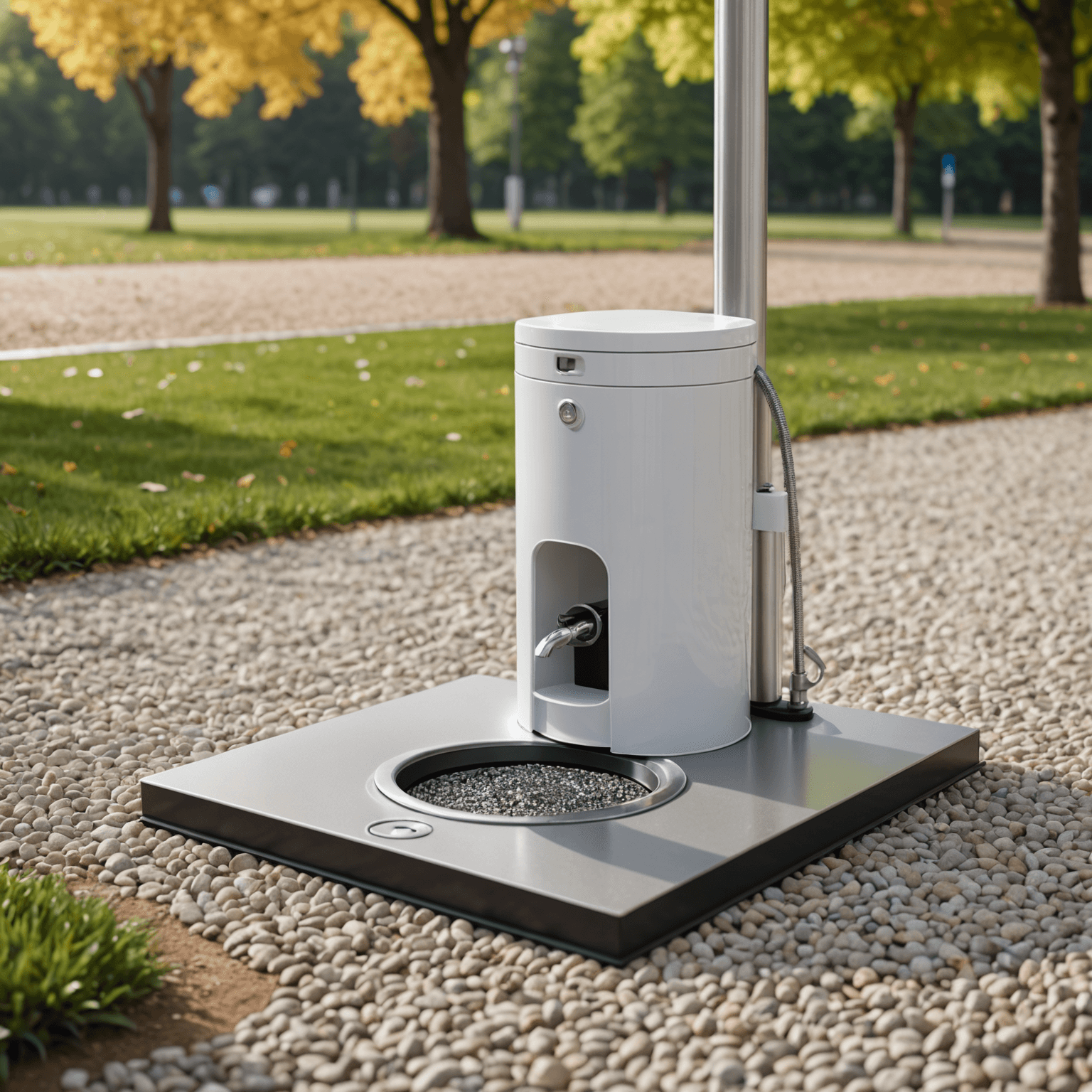
SanPole is a public pet toilet. Smartphone-authenticated, so only registered users can access the toilet sheets and waste disposal. When your dog uses it properly, a treat dispenses as positive reinforcement. The waste gets composted into fertilizer for park trees. A perfect circle of utility.
Monsieur is a robot dog that patrols at night, spraying sanitizer and deodorizer on spots where real dogs have marked. Yes, we made robot dogs clean up after real dogs. The irony is intentional. It also has odor sensors for monitoring and serves as neighborhood security. A mechanical butler for urban pet hygiene.
Inclusive Tax is the funding mechanism. Pet owners pay into a system that benefits everyone — cleaner streets, better property values, fewer angry signs ruining the scenery. It's surprisingly fair when you think about it.
Why Cities Designed Everything Except This
Cities have bike lanes. Cities have parking garages. Cities have designated smoking areas, pigeon deterrents, and elaborate drainage systems for rain that falls maybe thirty days a year.
But dogs? Dogs who walk these streets every single day, who have been humanity's companions for 15,000 years, whose owners pay taxes and vote and generally participate in society? The infrastructure for them is a water bottle and a plastic bag.
Japan even had a dog tax until 1982. From the Meiji era through Showa, municipalities collected fees specifically for canine public services. Then pets became more popular, and somehow the tax disappeared while the infrastructure need exploded. We're living with the consequences.
Meanwhile, in Western countries, public pet waste bins overflow because nobody thought about collection schedules. The "solutions" create new problems. The problems create friction between pet owners and non-owners. The friction creates warning signs. The warning signs make neighborhoods ugly. Property values drop. Everyone loses.
Pet Inclusive City breaks this cycle by treating the issue as what it is: infrastructure, not morality. Dogs aren't badly behaved. Cities are badly designed.
The Uncomfortable Truth About Shared Spaces
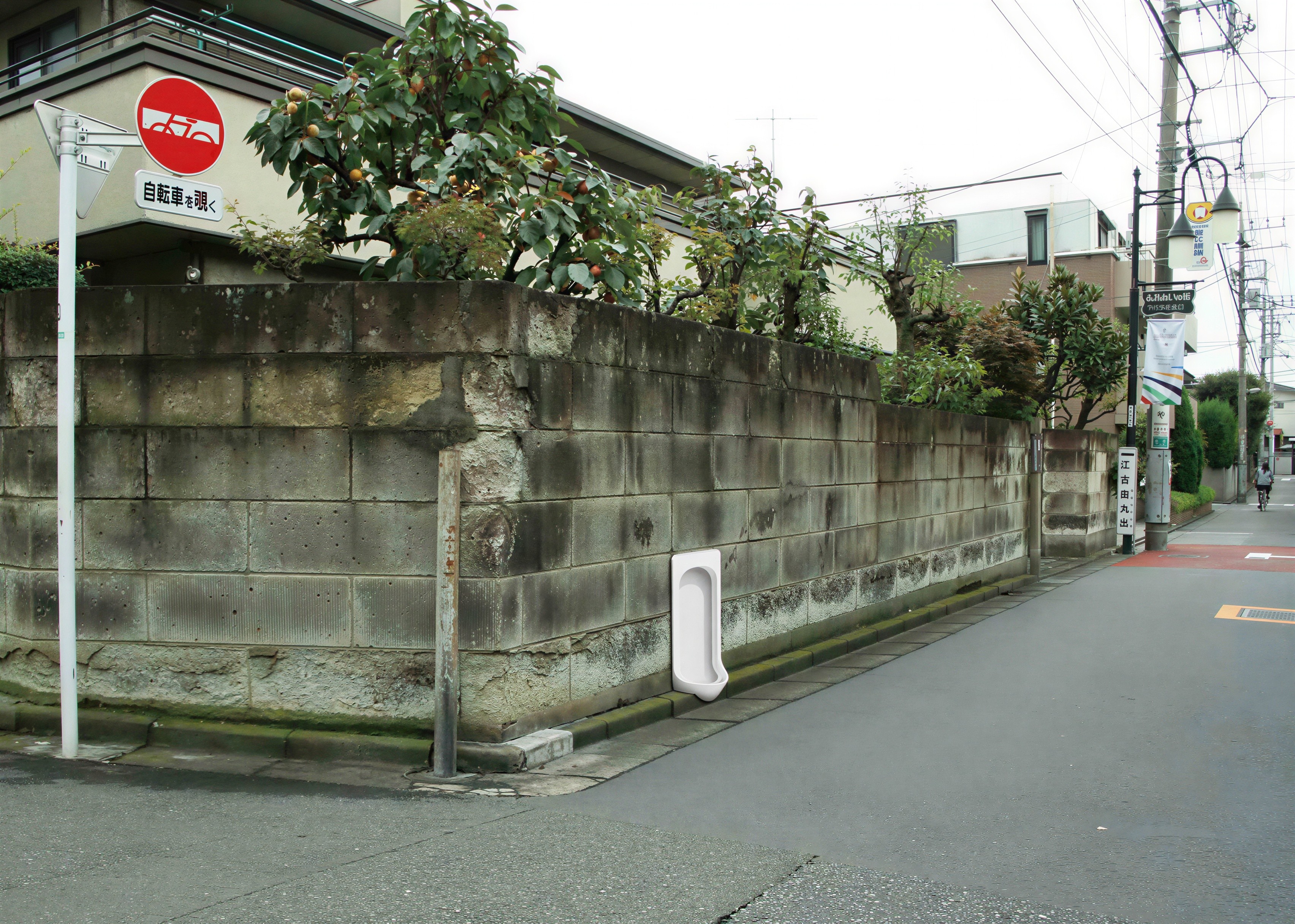
Here's what nobody wants to say: dogs are going to pee on things. It's biology, not rudeness. Marking is instinct. Bladders have limits. No amount of training or shaming changes the fundamental reality that living creatures produce waste.
The question isn't how to stop this. The question is how to accommodate it without everyone hating each other.
Pet Inclusive City is an attempt at honesty. Yes, pet owners should contribute to cleanup costs. Yes, non-owners deserve clean sidewalks. Yes, robot dogs sanitizing after real dogs is weird. But weird solutions that work are better than normal solutions that don't.
In Closing: The Missing Ingredient
Every morning, millions of dogs and their humans perform the same awkward ritual across every city in Japan. The water bottle. The apologetic glance. The pretense that this counts as responsibility.
We're proposing something different: actual infrastructure for an actual need that actually exists.
Is it strange to build a subscription service for dog toilets? Probably. Is it strange that this doesn't already exist? Definitely.
Pet Inclusive City: Because 34.2 trillion walks deserve better than 15 toilets.
Cities were designed for humans. Humans come with dogs. Time to update the blueprint.
From the kitchen with irony and humor.